Wisdom 310 Volume 6
The Strength
of Shelter
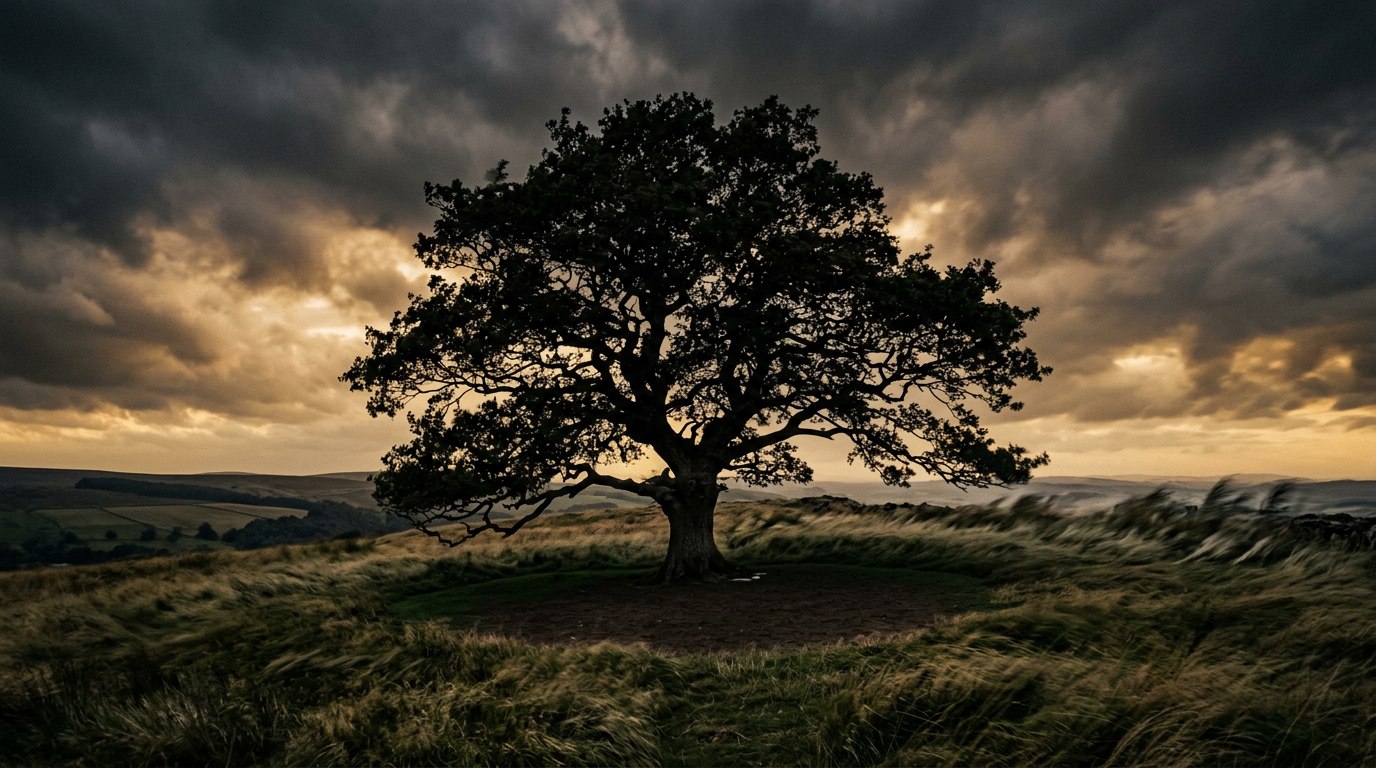
“A man should be like an oak, rooted and sheltering.”Listen to the complete wisdom
Full reading
A 3-minute reading is coming soon.
The narrated audio for this wisdom is in production. Read the complete transcript below in the meantime.
Interpretation
The oak is a specific kind of strength — not the flashy strength of a blade or a fire, but the patient strength of something that stays exactly where it's needed for decades. Its value isn't in what it conquers, but in what it lets rest beneath it: the family that shelters under a person's steadiness during their own storms. Rootedness and shelter are the same virtue seen from two directions — you can only give the second once you've secured the first.
The human lens
In a household, this shows up as the difference between a person who reacts to every crisis with matching panic and one whose calm becomes the actual safe place others run to. Children in particular are exquisitely tuned to whether the ground beneath them is stable, and they will organize their whole sense of security around one person's steadiness far more than around that person's achievements or charm. Being an oak means your mood in the storm matters more than your performance on a sunny day.
This isn't about suppressing feeling or playing stoic on command — oaks bend visibly in high wind, they just don't uproot. The strongest people in a family aren't the ones who never struggle, but the ones whose struggle never becomes everyone else's emergency. When you become that kind of shelter, you find that people don't just lean on you during hard seasons — they grow taller because you gave them ground to stand on at all.
Key lessons
- Roots come first. You cannot shelter anyone from a storm you yourself are being blown around by — stability has to be built inward before it can extend outward.
- Bending isn't breaking. An oak that never bent would snap in the first real storm; showing strain without losing your footing is the actual skill.
- Shelter is felt more than announced. Nobody needs to be told they're safe with you — they simply act calmer, sleep easier, and take more risks when you're rooted nearby.
- The canopy grows slowly. Being someone's shelter isn't a single dramatic act, it's the compounding result of showing up steady, season after ordinary season.
Symbolic parable
The Sapling and the Storm
A young sapling once complained to the old oak beside it that the wind never seemed to bother the oak the way it bothered the sapling, which whipped and shook with every gust. The oak said nothing for a long time, because it was busy — unseen below ground — sending roots another few inches deeper into rock it had been quietly working through for thirty years. From above, it looked like patience. Below, it was labor no one applauded.
The great storm came the following spring, and it split three younger, showier trees that had grown tall fast but shallow. The oak bent nearly to the ground and held. Underneath its canopy, a whole family of animals rode out the night untouched, and the sapling, watching from the one patch of calm the oak's shadow provided, finally understood: the oak's strength hadn't been about withstanding the wind at all. It had been thirty years of unseen digging, so that on the one night it mattered, something else could stay dry beneath it.
“What looks like calm in the storm is usually just roots no one saw you grow.”
The Rooted Ground Audit
-
01
Locate your own roots
Name three things — practices, people, beliefs — that actually steady you before a crisis, not just after one.
-
02
Check who's leaning on your canopy
List the people who currently look to your calm during hard moments, and honestly rate how steady you've been for them this year.
-
03
Deepen one root this month
Choose the weakest of your three steadying practices and give it deliberate time this month, before the next storm arrives, not during it.
Theo's story
Theo prided himself on being the strong one, but his version of strength was mostly volume — he took charge loudly the moment anything went wrong, barking solutions before anyone had finished explaining the problem. His kids learned to hide small troubles from him because bringing him a problem meant inviting a storm of his own on top of it. He thought he was protecting his family. He was actually the weather they were trying to avoid.
After a health scare forced him to slow down for a season, Theo noticed how much quieter the house was when he simply asked questions instead of issuing verdicts. He practiced staying seated, staying low-voiced, letting a problem finish being described before reacting to it. His daughter, months later, brought him a genuinely serious problem for the first time in years — not because it had gotten easier to tell him, but because he had finally become still enough to be told.
Conclusion
Rootedness is rarely glamorous and never fast — it's built in the unremarkable seasons when nothing is testing it, so that it's simply there when something finally does. The oak doesn't shelter because it decided to one dramatic day; it shelters because of decisions made quietly, underground, for years beforehand.
Grow your roots before you're asked to be someone's shelter.
Continue the journey
Read Legacy & Human Connection
Volume 6 of Thoughts for Life brings together 63 wisdoms on the relationships, love, and legacy that define a life well lived.
Go deeper
What becomes possible when you live this wisdom?
Coaching turns reflection into a focused next move, for your work, your leadership, and the life you are building.
Explore coaching